
Bench Warrants in Beaver County
A Beaver County bench warrant is a court order tied to a case obligation. Utah Code §77-7-19 allows a judge to issue one when a person cited to court does not appear or pay as permitted. A missed later hearing, contempt, or failure to follow an order can also lead to a warrant. The issuing court determines the reason and current status.
For traffic, infractions, and many Class B or C matters, the relevant office is often Beaver, Milford, or Minersville Justice Court. Felony and Class A matters go through Beaver District Court. The county’s public guidance uses “bench warrant” and “failure to appear,” not capias pro fine.
A Beaver County Traffic Citation Can Become an FTA Warrant
The local sequence is citation, required appearance or payment, failure to comply, and possible bench warrant. The fine schedule warns of an FTA charge, a driver-license hold, a warrant, and added fines if a person neither pays nor appears as directed. The court can tell you whether a specific citation permits payment or requires a judge.
Utah DLD uses status code SFTA for a fail-to-appear or comply suspension. Court clearance comes first; DLD’s ordinary reinstatement process also lists a $40 fee. A license hold and a court warrant are related records, not the same record.
How a Beaver County Bench Warrant Is Issued
When a cited person does not appear or pay as the citation allows, Utah law permits the court to issue a bench warrant. The judge’s order authorizes arrest; the clerk records it in the court system, and covered warrants are transmitted to Utah’s statewide file. The court that issued it remains responsible for the case.
Beaver County’s Justice Court FAQ says a local warrant remains active until payment is received in full or the person has been seen by a judge. Setting a future date alone does not recall it. Ask the clerk whether the rule applies to your case and how the status change will be documented.
Beaver County Uses Bench Warrant, Not Capias, as the Local Term
Beaver’s public court and Sheriff material uses “bench warrant,” “failure to appear,” “bail,” and “warrant for arrest.” Research did not find capias or capias pro fine as the controlling local label. Use the language on the court notice and ask the clerk to explain any shorthand on a docket entry.
For some older traffic, infraction, or misdemeanor matters, Utah court rules provide an order-to-show-cause process that may lead to dismissal consideration. It is not automatic expungement and does not prove that a particular Beaver warrant has ended. Confirm eligibility with the issuing Justice Court.
Beaver County Bench Warrant vs Arrest Warrant
A bench warrant responds to a court obligation, such as a missed appearance. An arrest warrant follows a judge’s probable-cause review of an alleged offense. Both can authorize arrest, but the reason, case stage, and release conditions differ. Read about Beaver County arrest warrants for the separate Rule 6 process.
| Feature | Bench Warrant | Arrest Warrant |
|---|---|---|
| Trigger | Missed hearing, citation FTA, or contempt | Probable cause of an offense |
| Who Issues It | Judge in the existing case | Judge or magistrate after review |
| Underlying Case | Usually an existing case with an unmet duty | New or pending criminal charge |
| How It Clears | Action set by the issuing court | Release terms and later court process |
Which Beaver County Court Handles the FTA
Beaver Justice Court handles citations from the Sheriff, Utah Highway Patrol, DWR, and other agencies. Milford and Minersville Justice Courts handle lower-level matters in their areas. The Fifth District Court is the contact for felony and Class A cases. A warrant result’s Court Issue field or the original citation can help identify the right counter.
| Court | Common local lane | Phone |
|---|---|---|
| Beaver Justice Court | Traffic, infractions, Class B/C | (435) 438-6470 |
| Milford Justice Court | Milford-area lower-level cases | (435) 387-5571 |
| Minersville Justice Court | Minersville-area lower-level cases | (435) 386-2586 |
| Beaver District Court | Felony and Class A matters | (435) 438-5309 |
How to Resolve a Beaver County Bench Warrant
Call the issuing court before paying or traveling. Ask the clerk whether full payment, bail, a judge appearance, a plan, or a motion is required. No Beaver public walk-in surrender form or warrant-specific recall form was located.
- Search BCI SWW and note the court and case identifiers.
- Call the clerk to confirm active status and the required remedy.
- Consult a Utah attorney if the charge is serious or surrender is uncertain.
- Complete the court-approved payment or appearance step and keep proof.
Caution: A future setting alone does not recall the warrant; ask the court what action clears it and how that action will be entered.
Beaver County Justice Court Payment and Recall Are Separate Steps
County Justice Courts offer online, mail, and in-person payment routes that vary by court and case. The Beaver schedule says it does not take payment by phone; confirm the current method with the clerk. Payment plans may be available case by case, and some eligible lower-level matters may qualify for community-service credit. Neither option should be assumed to recall a warrant without court confirmation.
If a traffic FTA caused a license suspension, ask for a docket or other court clearance and then follow DLD instructions. A receipt proves payment, while the court’s entry or order shows the warrant action.
The county Justice Courts page links its three local payment and citation routes.
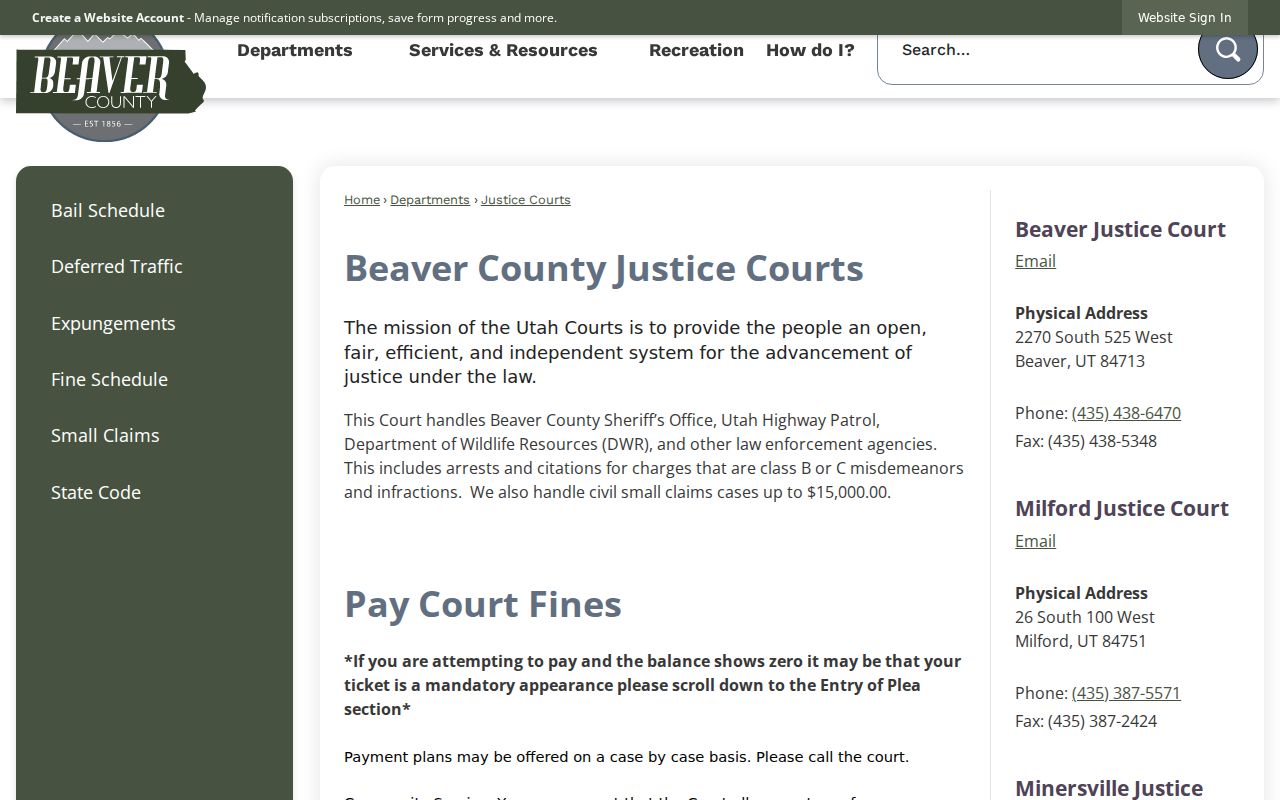
The linked page groups payment information without combining the courts into one warrant desk.
Which Beaver County Court Issued the Bench Warrant
The issuing court controls recall. The Sheriff may serve the warrant or answer custody questions, but it cannot replace the judge’s case decision. Start with the citation, case notice, or BCI result. If you need help identifying the court, the county warrant search steps explain how to use the Court Issue field and Xchange history.
Minersville has a separate local wrinkle: Beaver’s Plea in Abeyance form says it is not available there. Call Minersville Justice Court about alternatives instead of submitting the Beaver/Milford form.
A Beaver County Bench Warrant Has No Walk-In Recall Window
Beaver County’s public information does not identify a general window where someone can arrive and have a bench warrant cleared. A court date, payment receipt, or conversation with dispatch is not itself a recall order. Before traveling, call the issuing clerk and ask whether the judge requires an appearance, whether counsel can appear or file a request, and what proof will show the warrant was recalled.
Dispatch at (435) 438-2862 is a non-emergency routing contact, and the jail at (435) 438-6497 can answer custody or bond questions. Neither office decides the court remedy. If arrest or release conditions are a concern, obtain case-specific advice before choosing how to appear.
Beaver County’s official bail FAQ explains local bond and payment information.
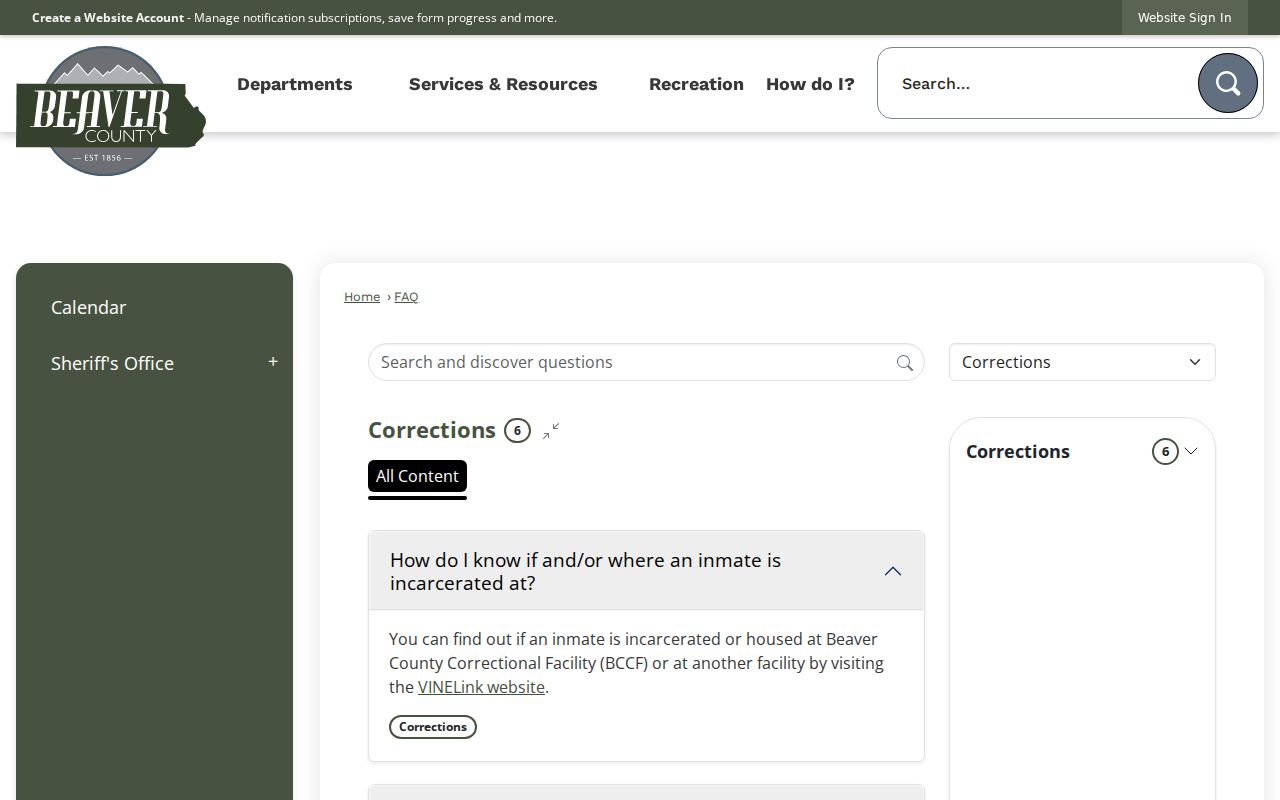
The FAQ is a county information route, not a warrant recall order; the issuing court confirms status.